Platform
Architecture Built for Enterprise Reality
Semantic intelligence, governed execution, and scalable connectivity — designed for multi-entity organizations.
LIVE
V2.4
bookmark_border
Core Infrastructure
Auto-scaling clusters managed via
Kubernetes control plane.
Health Score
98.4%



+12
Updated 2m ago
security
Security & Compliance
description
SOC2_Report_2024.pdf
1.2MB • PDF
download
shield
Privacy_Protocol.ppt
4.5MB • PPTX
download

Marcus
Chen
Principal
Architect
chat_bubble
Chat
inventory_2
42
Nodes
schedule
99.9%
Up
pie_chart
84%
Util
Latency (ms)
142
trending_down
12%
Error Rate
0.02%
trending_up
4%
A Platform, Not a Collection of Tools
Deepspot is designed as an enterprise intelligence operating system. It unifies data connectivity, semantic meaning, decision signals, and governed execution — without losing context across entities, teams, or functions.
A clear separation of concerns:
connectivity
meaning
intelligence
execution
governance.
Data & Connectors
Enterprise databases, warehouses, business systems, and event streams
Data & Connectors
Enterprise databases, warehouses, business systems, and event streams
Data & Connectors
Enterprise databases, warehouses, business systems, and event streams
Semantic & KPI Layer
Business definitions, governed metrics, entity-aware meaning
Semantic & KPI Layer
Business definitions, governed metrics, entity-aware meaning
Semantic & KPI Layer
Business definitions, governed metrics, entity-aware meaning
Intelligence Lifecycle
Explore → Monitor → Detect → Predict → Act
Intelligence Lifecycle
Explore → Monitor → Detect → Predict → Act
Intelligence Lifecycle
Explore → Monitor → Detect → Predict → Act
Enterprise Agents & Actions
Governed execution across workflows and enterprise systems
Enterprise Agents & Actions
Governed execution across workflows and enterprise systems
Enterprise Agents & Actions
Governed execution across workflows and enterprise systems
Governance & Audit
Access control, policy enforcement, audit trails, approvals
Governance & Audit
Access control, policy enforcement, audit trails, approvals
Governance & Audit
Access control, policy enforcement, audit trails, approvals
Databases & Warehouses
Connect governed sources (SQL, warehouses, lakehouses) with enterprise-grade access boundaries.
Databases & Warehouses
Connect governed sources (SQL, warehouses, lakehouses) with enterprise-grade access boundaries.
Databases & Warehouses
Connect governed sources (SQL, warehouses, lakehouses) with enterprise-grade access boundaries.
Databases & Warehouses
Connect governed sources (SQL, warehouses, lakehouses) with enterprise-grade access boundaries.
Databases & Warehouses
Connect governed sources (SQL, warehouses, lakehouses) with enterprise-grade access boundaries.
Databases & Warehouses
Connect governed sources (SQL, warehouses, lakehouses) with enterprise-grade access boundaries.
Business Systems
Integrate ERP, finance systems, HRIS, CRM, POS, and operational tools as first-class inputs.
Business Systems
Integrate ERP, finance systems, HRIS, CRM, POS, and operational tools as first-class inputs.
Business Systems
Integrate ERP, finance systems, HRIS, CRM, POS, and operational tools as first-class inputs.
Business Systems
Integrate ERP, finance systems, HRIS, CRM, POS, and operational tools as first-class inputs.
Business Systems
Integrate ERP, finance systems, HRIS, CRM, POS, and operational tools as first-class inputs.
Business Systems
Integrate ERP, finance systems, HRIS, CRM, POS, and operational tools as first-class inputs.
Events & Signals
Ingest operational events and KPIs to drive continuous detection and decision signals.
Events & Signals
Ingest operational events and KPIs to drive continuous detection and decision signals.
Events & Signals
Ingest operational events and KPIs to drive continuous detection and decision signals.
Events & Signals
Ingest operational events and KPIs to drive continuous detection and decision signals.
Events & Signals
Ingest operational events and KPIs to drive continuous detection and decision signals.
Events & Signals
Ingest operational events and KPIs to drive continuous detection and decision signals.
Databases & Warehouses
Connect governed sources (SQL, warehouses, lakehouses) with enterprise-grade access boundaries.
Business Systems
Integrate ERP, finance systems, HRIS, CRM, POS, and operational tools as first-class inputs.
Events & Signals
Ingest operational events and KPIs to drive continuous detection and decision signals.
Data & Connectors
Connect enterprise systems without turning the platform into a fragile integration project. Deepspot supports governed ingestion and controlled access across workspaces and applications.

Data & Connectors
Connect enterprise systems without turning the platform into a fragile integration project. Deepspot supports governed ingestion and controlled access across workspaces and applications.

Frequently Asked Questions
Still confusing with something? Let us know, we are here to help!
Contact Us
Frequently Asked Questions
Still confusing with something? Let us know, we are here to help!
Contact Us
How is the platform structured ?
The platform is built on a clear separation of concerns across five layers: Data & Connectivity, Semantic & KPI Layer, Intelligence Lifecycle, Agents & Applications, and finally, Execution & Audit.
How is the platform structured ?
The platform is built on a clear separation of concerns across five layers: Data & Connectivity, Semantic & KPI Layer, Intelligence Lifecycle, Agents & Applications, and finally, Execution & Audit.
How is the platform structured ?
The platform is built on a clear separation of concerns across five layers: Data & Connectivity, Semantic & KPI Layer, Intelligence Lifecycle, Agents & Applications, and finally, Execution & Audit.
How is the platform structured ?
The platform is built on a clear separation of concerns across five layers: Data & Connectivity, Semantic & KPI Layer, Intelligence Lifecycle, Agents & Applications, and finally, Execution & Audit.
How is the platform structured ?
The platform is built on a clear separation of concerns across five layers: Data & Connectivity, Semantic & KPI Layer, Intelligence Lifecycle, Agents & Applications, and finally, Execution & Audit.
What is the purpose of the Semantic & KPI Layer?
What types of data can the platform connect to?
How is the platform structured ?
The platform is built on a clear separation of concerns across five layers: Data & Connectivity, Semantic & KPI Layer, Intelligence Lifecycle, Agents & Applications, and finally, Execution & Audit.
What is the purpose of the Semantic & KPI Layer?
What types of data can the platform connect to?

Review the Architecture With Your Team
We'll walk through enterprise structure, semantic governance, and execution design.

Review the Architecture With Your Team
We'll walk through enterprise structure, semantic governance, and execution design.

Review the Architecture With Your Team
We'll walk through enterprise structure, semantic governance, and execution design.
Semantic & KPI Layer
Enterprises don't fail because they lack dashboards. They fail when teams disagree on definitions. The semantic layer ensures consistent meaning across entities, functions, and decision workflows.
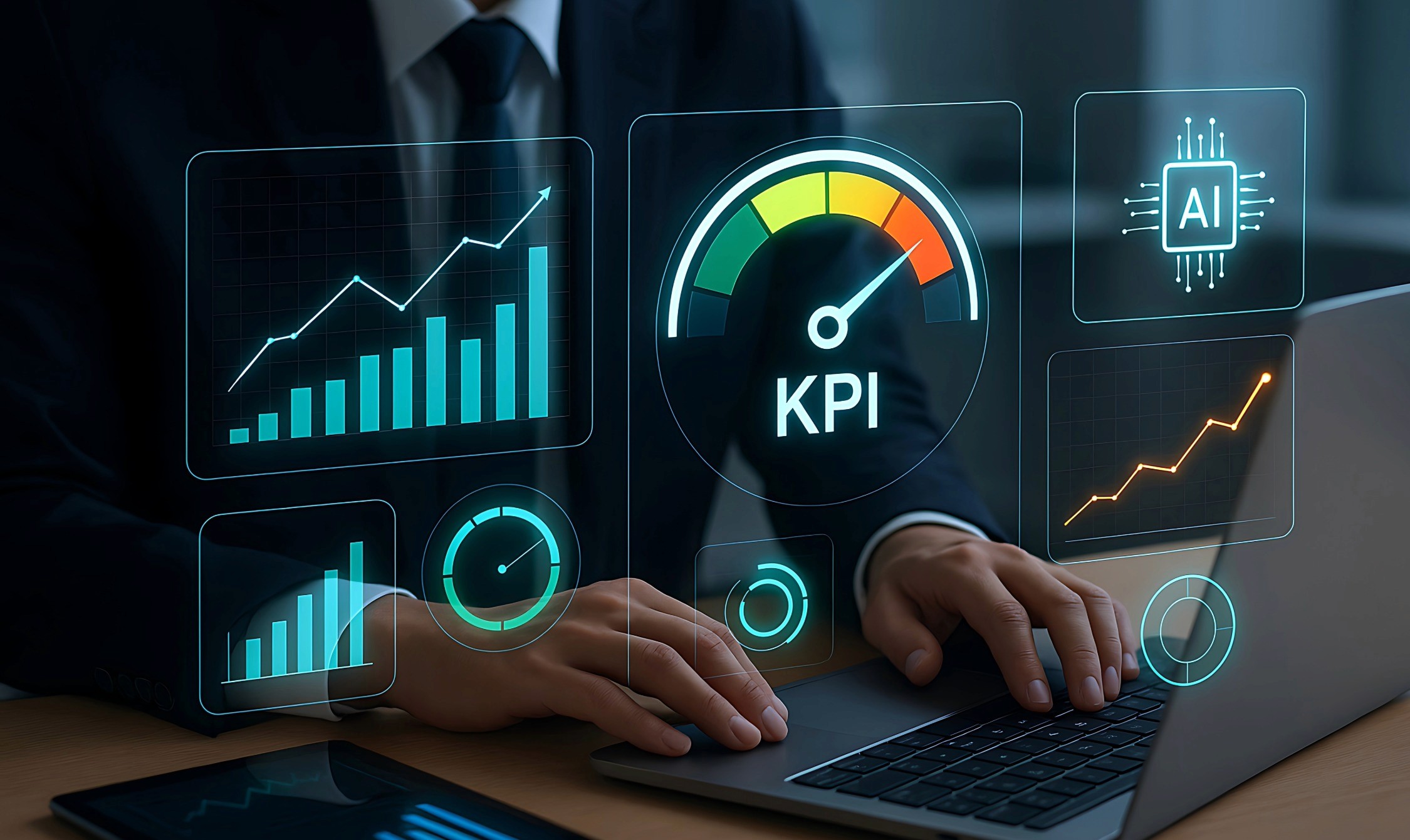


Business definitions that align with enterprise language
Standardized KPIs and governed metric calculations
Role-aware visibility across workspaces and applications
Controlled drill-downs without definition drift
Governance, Security & Auditability
overnance is embedded across data, decisions, and execution. Policies don't sit in a document — they are enforced by the platform